From Sketch to Product: How a Fashion Idea Becomes a Finished Garment
Every finished garment begins long before the first piece of fabric is cut. Behind every jacket, dress, blouse, or pair of trousers lies a creative and technical journey: an idea becomes a sketch, the sketch becomes a pattern, the pattern becomes a prototype, and finally, the prototype becomes a product.
In fashion design, this process is where creativity meets precision. It is not only about drawing beautiful silhouettes, but also about understanding materials, proportions, construction, fit, and the story behind a collection.
This article takes you through the key stages of turning a fashion sketch into a real product.
1. The First Idea: Where Design Begins
The design process often starts with a feeling, a visual reference, or a specific need. A designer may be inspired by architecture, vintage tailoring, fabric textures, lifestyle trends, or a certain mood.
Before creating a final design, it is important to ask:
What kind of garment should this become?
Who is it designed for?
What emotion should it communicate?
Should it feel modern, elegant, minimal, powerful, soft, or playful?
At this early stage, the idea does not need to be perfect. The goal is to collect impressions and define a creative direction.
For example, a belted jacket may begin with keywords such as:
structured shoulders, clean lines, elegant minimalism, timeless tailoring, confident silhouette.
These words help guide every decision that follows.
2. Research and Moodboard Development
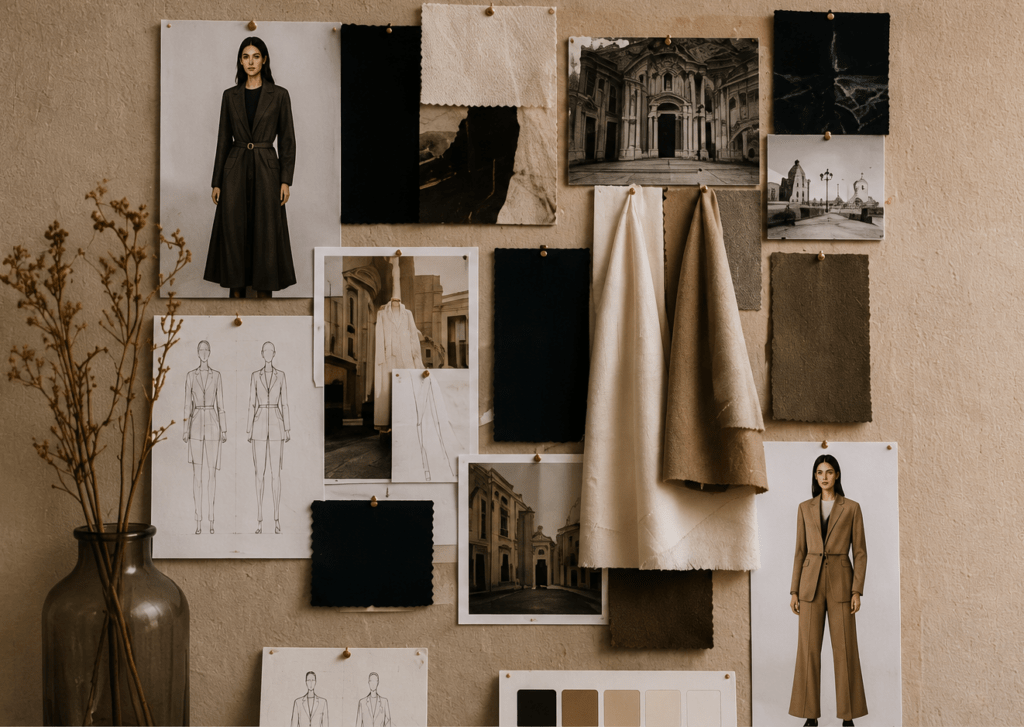
Once the initial idea is clear, the next step is research. A moodboard helps translate abstract inspiration into a visual language.
A strong moodboard may include:
fashion references, fabric textures, color palettes, architecture, lifestyle imagery, historical details, runway inspiration, and material samples.
The moodboard acts as a visual compass. It helps define the atmosphere of the design before the technical work begins.
For a tailored jacket, the moodboard might include neutral tones, wool textures, architectural lines, black-and-white photography, and strong silhouettes. These elements create a consistent design direction and prevent the product from feeling random or disconnected.
3. Sketching: Exploring the Silhouette
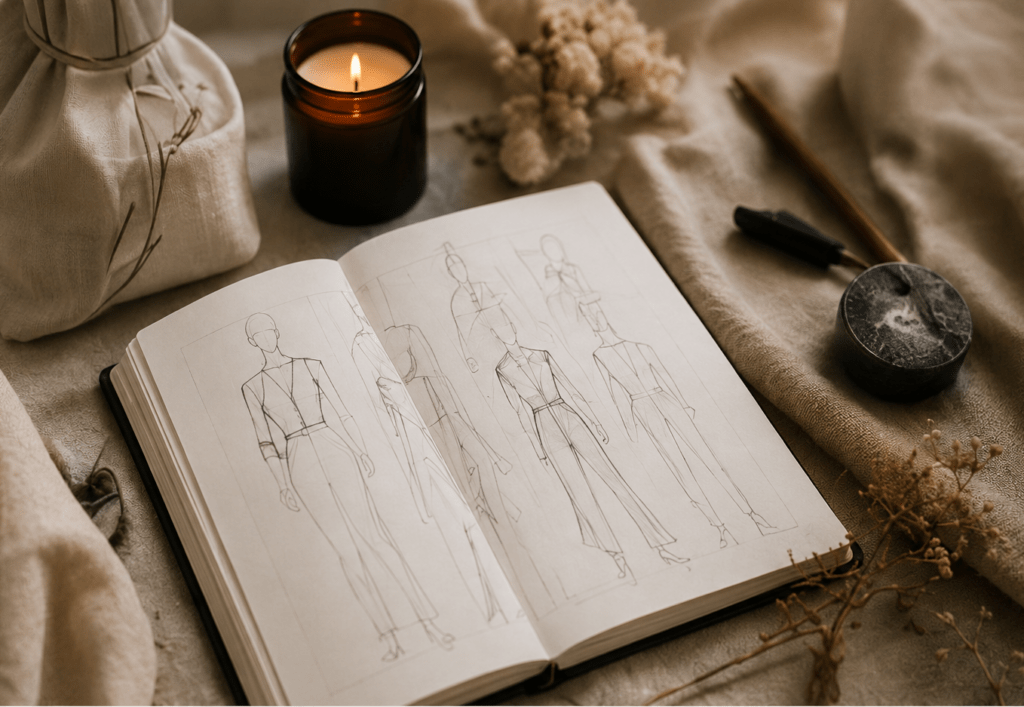
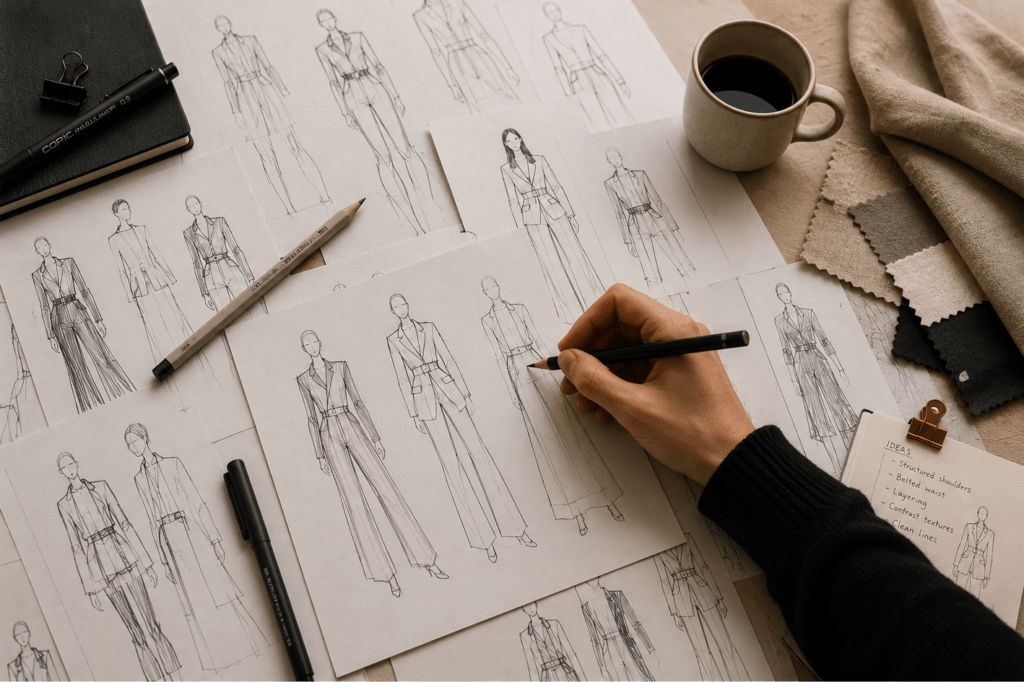
Sketching is one of the most important parts of fashion design. It allows the designer to explore different shapes, proportions, and details quickly.
At this stage, the sketches are not always perfect. They are a way of thinking on paper.
A designer might test:
different lapel shapes, sleeve lengths, belt positions, pocket placements, shoulder widths, trouser proportions, and overall silhouette.
Sketching multiple versions helps reveal what works best. Sometimes the first idea is not the strongest one. Through repetition and refinement, the design becomes clearer.
This is where the garment begins to find its identity.
4. Refining the Design
After several rough sketches, the designer selects the strongest direction and starts refining it.
Refinement means making the design more intentional. Every detail should have a reason.
For example:
A belt can define the waist and create structure.
Shoulder pads can add confidence and balance.
A clean lapel can create a timeless look.
Pocket placement can affect both function and visual harmony.
The length of the jacket can change the entire proportion of the outfit.
At this stage, the design becomes more than an idea. It becomes a clear concept.
5. Choosing Fabrics and Materials
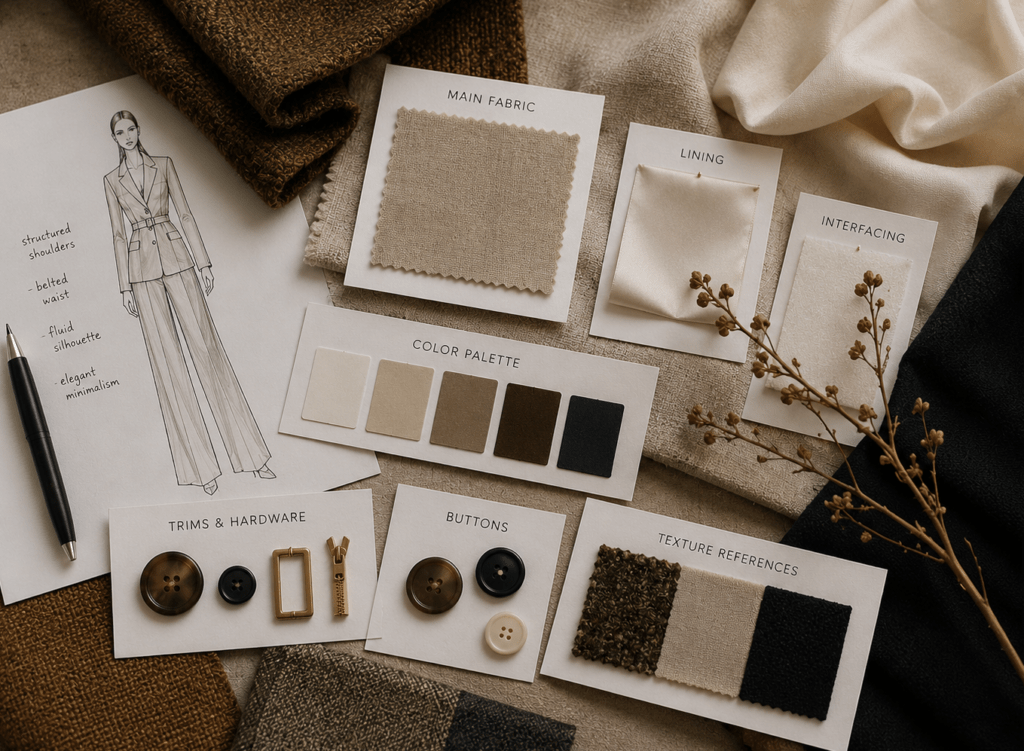
Fabric selection can completely change the final result of a garment. The same design can look structured, soft, casual, or luxurious depending on the material.
When choosing fabrics, designers consider:
weight, texture, drape, durability, comfort, season, production cost, and how the fabric reacts to construction.
For a belted jacket, a wool blend twill may be a good choice because it holds shape while still allowing movement. A lining fabric adds comfort and improves the way the garment sits on the body. Interfacing supports areas such as collars, lapels, waistbands, and front panels.
Trims and hardware are also part of the design language. Buttons, buckles, zippers, and labels should match the overall mood of the product.
A small detail can make the garment feel more refined and complete.
6. Creating the Color Story
Color is not only decoration. It communicates mood, season, and brand identity.
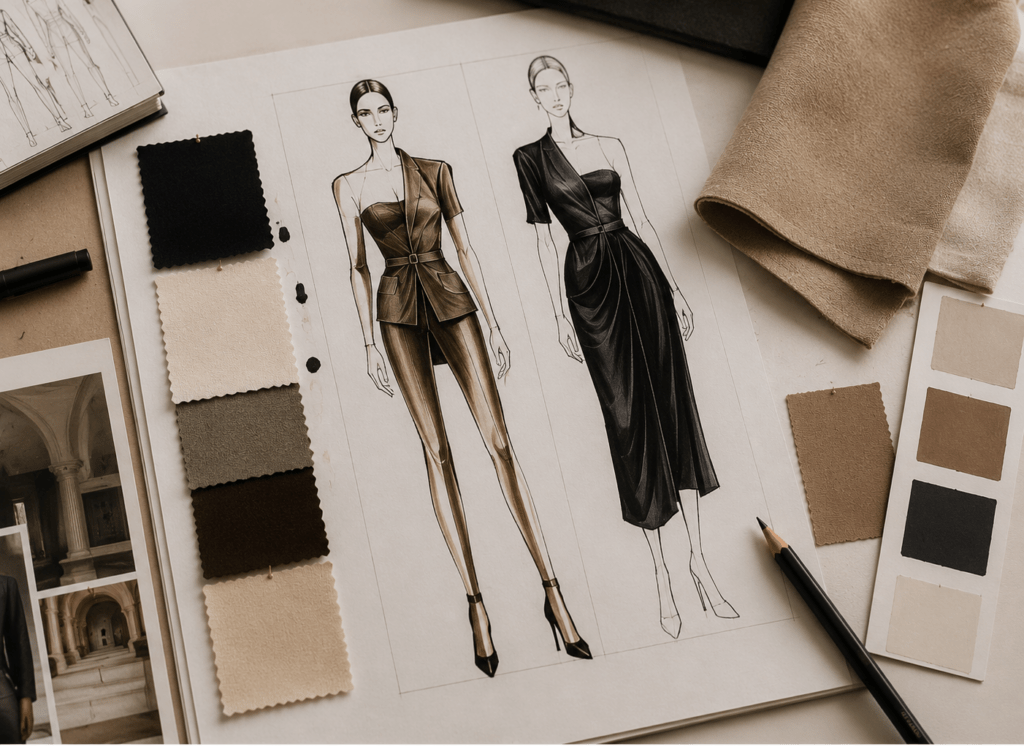
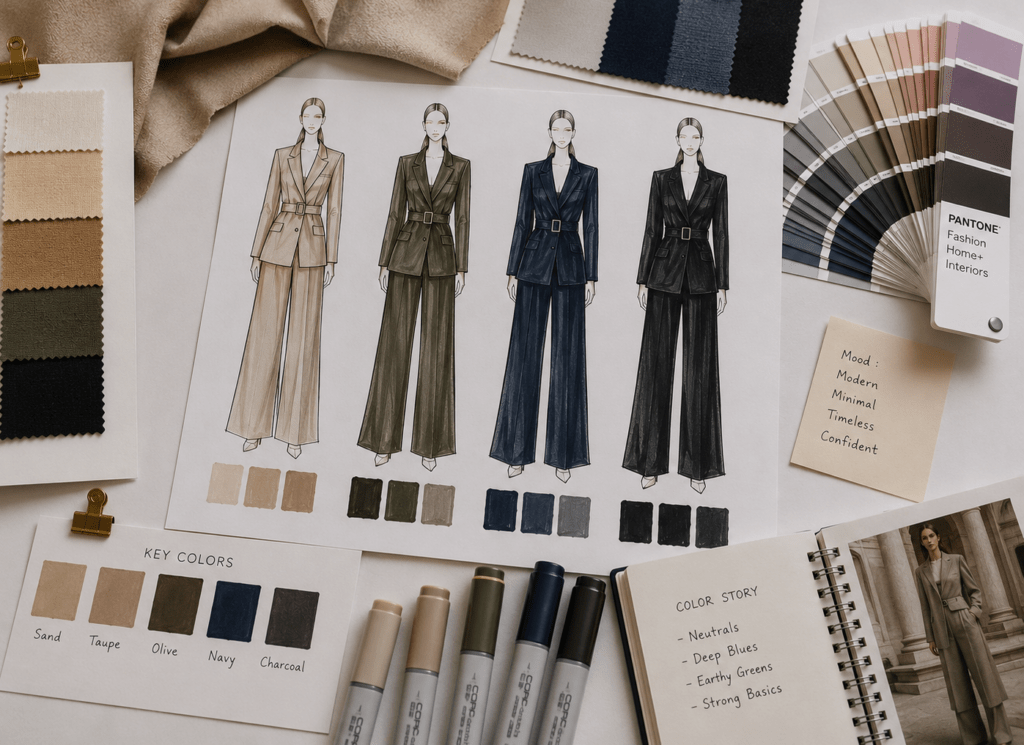
A strong color palette helps create consistency across a collection. Neutral tones such as sand, taupe, olive, navy, charcoal, cream, and black can create a modern and timeless feeling.
When developing a color story, designers often test the same garment in different shades. This helps determine which colors best support the silhouette and the target audience.
A jacket in sand may feel soft and elegant.
A jacket in olive may feel modern and grounded.
A jacket in navy may feel classic and polished.
A jacket in black may feel strong and sophisticated.
The right color can turn a good design into a desirable product.
7. Pattern Making: Turning the Sketch into Shape
Pattern making is the bridge between drawing and reality.
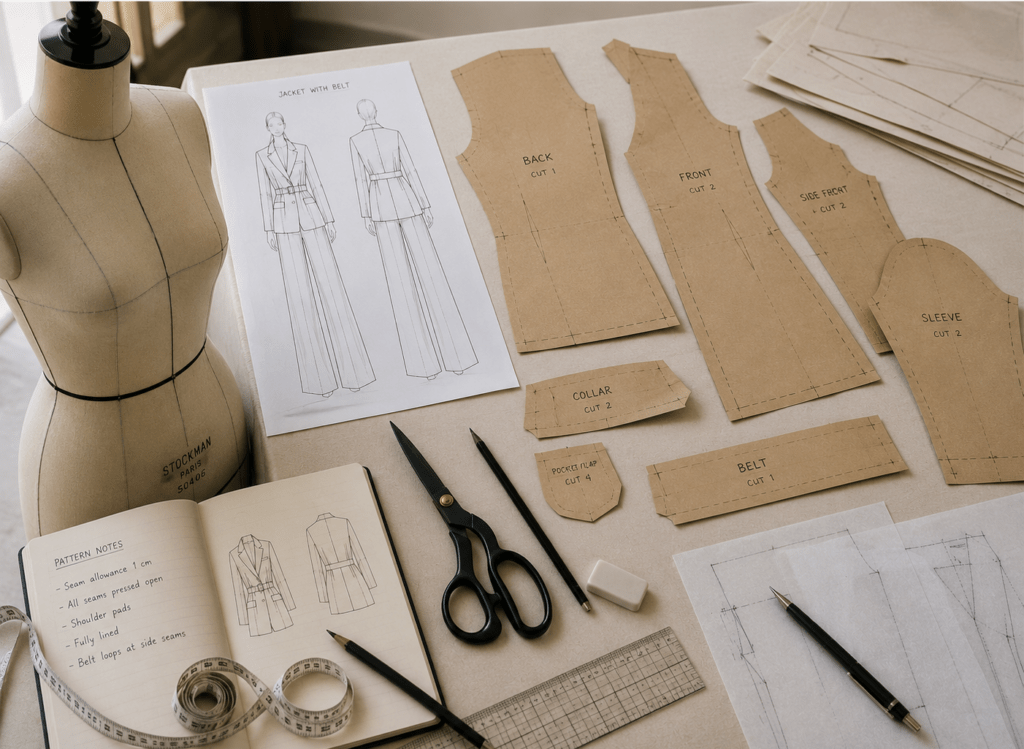
A sketch is two-dimensional, but a garment must fit a three-dimensional body. Pattern pieces define how the fabric will be cut and sewn together.
For a jacket, the pattern may include:
front pieces, back pieces, side front panels, sleeves, collar, lapel, pocket flaps, belt, lining pieces, and interfacing pieces.
Each pattern piece includes important information such as grainline, seam allowance, notches, cutting instructions, and placement marks.
This stage requires precision. Even small changes in the pattern can affect the final fit, balance, and comfort of the garment.
8. Technical Drawings and the Tech Pack
Once the design and pattern direction are defined, the garment needs to be documented clearly.
This is where technical drawings and tech packs become essential.
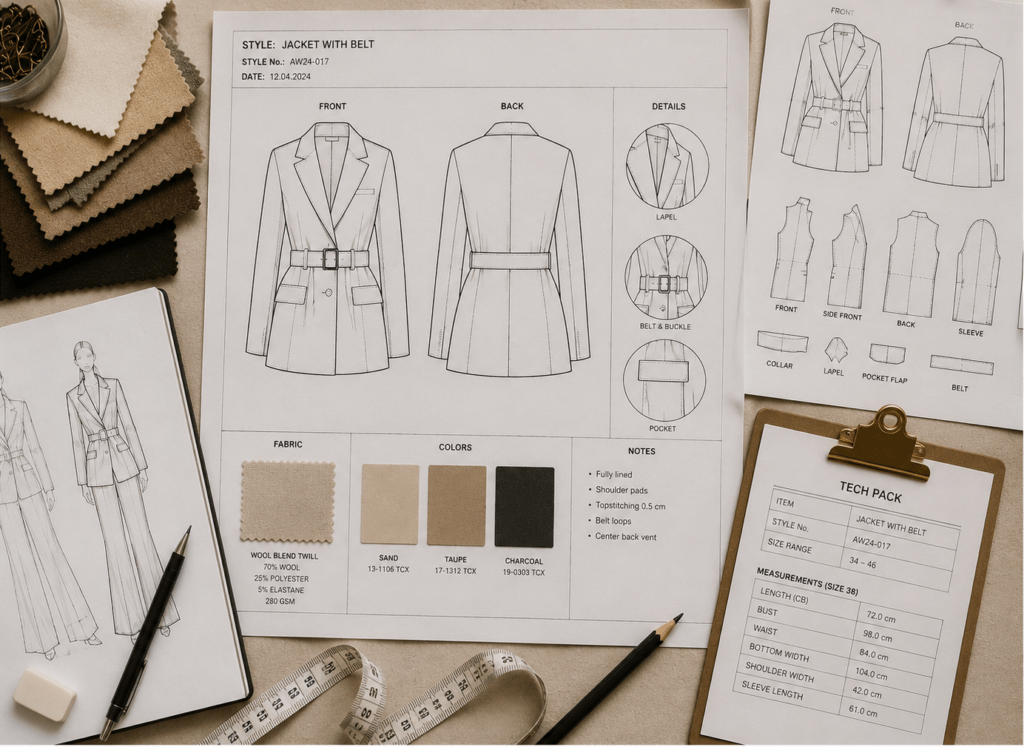
A technical drawing shows the garment in a clean, flat, and detailed way. It usually includes front view, back view, and detail views such as lapels, pockets, belts, buttons, or stitching.
A tech pack may include:
style name, style number, technical sketches, measurements, fabric information, color options, trims, construction notes, seam details, size range, and production instructions.
The tech pack is the communication document between designer, pattern maker, sample maker, and manufacturer.
Without a clear tech pack, mistakes are more likely to happen during production.
9. Prototype and Fitting
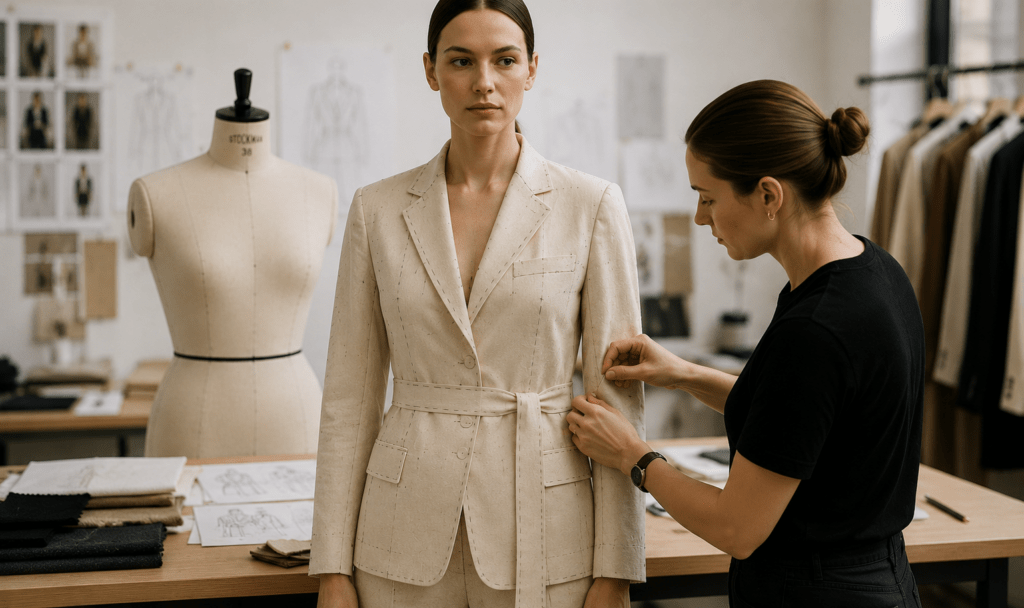
Before a garment goes into production, a first sample or prototype is created.
This sample is tested on a mannequin or real model to check:
fit, proportion, comfort, sleeve movement, waist placement, shoulder structure, length, pocket position, and overall appearance.
Fittings are an important part of the process because they reveal problems that cannot always be seen in a sketch.
A jacket may look perfect on paper but need adjustments in the shoulder, waist, sleeve, or back length once it is made in fabric.
Design is not finished after the first sample. Often, it takes several rounds of corrections before the garment is ready.
10. Final Product Development
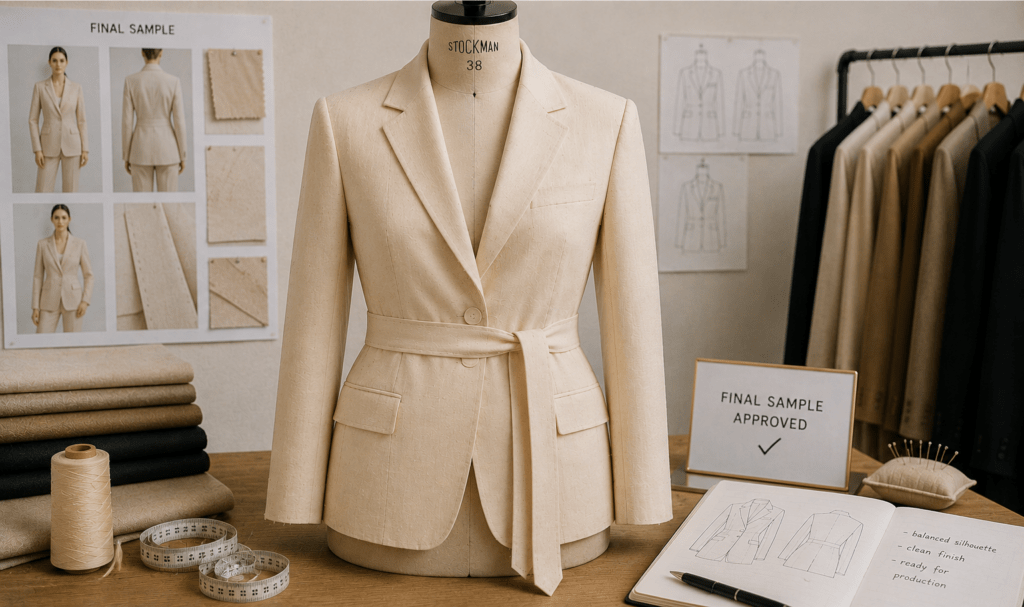
After the fitting corrections are made, the garment moves closer to production.
The final version should combine:
a strong design concept, accurate patterns, suitable fabrics, clear technical documentation, good fit, and consistent construction quality.
At this point, the original sketch has become a real product. What started as a simple idea is now a garment that can be worn, photographed, sold, and experienced.
This transformation is one of the most exciting parts of fashion design.
Why This Process Matters
Fashion is often seen only as the final image: the finished outfit, the campaign photo, or the runway look. But behind every product is a detailed process that requires creativity, patience, and technical knowledge.
Understanding the journey from sketch to product helps designers make better decisions. It also helps fashion lovers, students, and customers appreciate the craftsmanship behind each garment.
A finished product is never just fabric and seams.
It is research, imagination, structure, testing, correction, and storytelling — all brought together in one design.
Conclusion: From Vision to Reality
The journey from sketch to product shows the full depth of fashion design. It begins with inspiration and ends with a finished garment, but every step in between matters.
The sketch gives the idea a shape.
The moodboard gives it direction.
The fabric gives it character.
The pattern gives it structure.
The tech pack gives it clarity.
The fitting gives it life.
This is how fashion becomes real.
From the first pencil line to the final product, every detail tells part of the story.