From Sketch to Evening Gown: How a Couture Concept Comes to Life
Fashion rarely begins with a finished garment. More often, it starts with a single line, a mood, a silhouette, or a small visual idea that slowly develops into something more complete. A sketch is not just a drawing. It is the first visible step of a design journey.
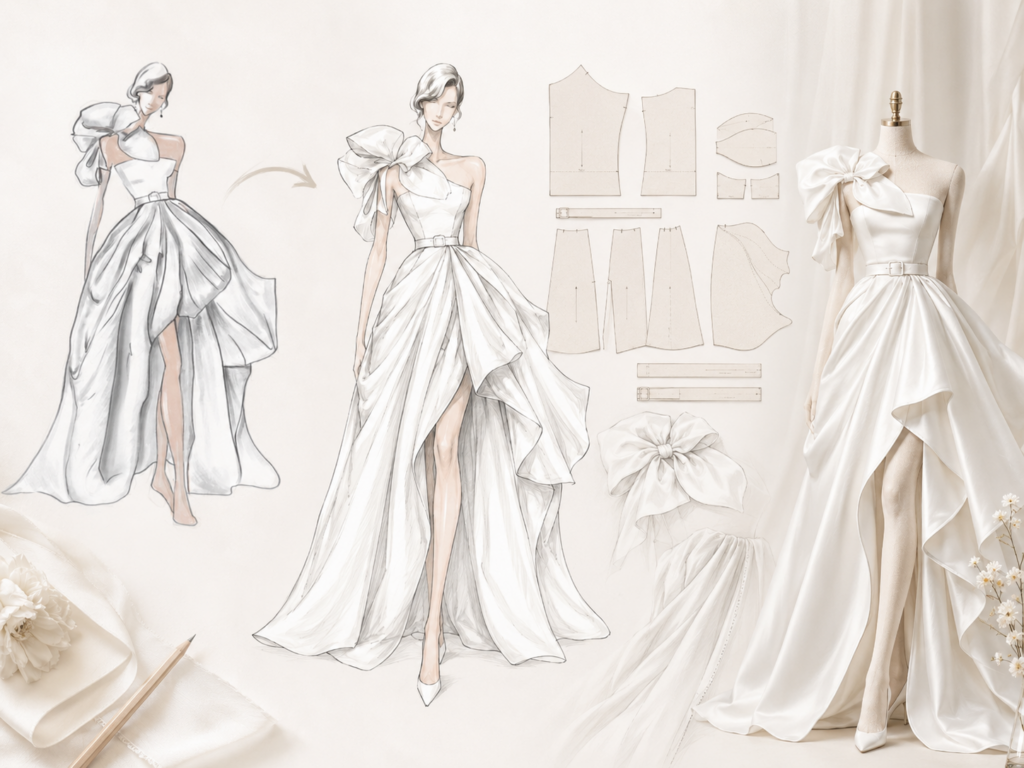
In this post, we follow the creative process behind an elegant evening gown concept: a white couture-inspired dress with an asymmetrical bodice, an oversized shoulder bow, a defined waist, a dramatic draped skirt, and a high front slit. The design feels light, feminine, and luxurious — but behind its soft appearance lies a thoughtful process of fashion illustration, design analysis, material planning, and pattern development.
1. The First Idea: A Silhouette Is Born
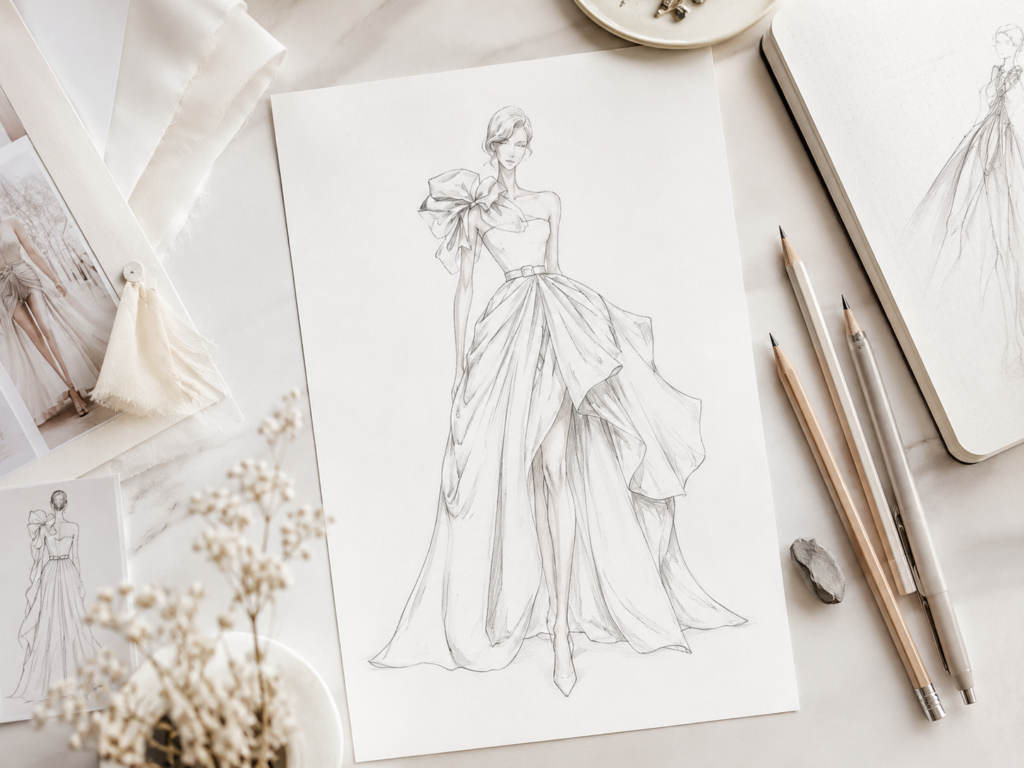
Every garment begins with an idea. In this case, the first sketch introduces a strong and elegant silhouette. The most eye-catching element is the large sculptural bow on one shoulder. It immediately gives the gown a couture-inspired character and turns the upper body into the visual focus of the design.
The key elements of the concept are clear from the beginning: an asymmetrical bodice, one exposed shoulder, a slim belt at the waist, a voluminous floor-length skirt, and a high slit that brings movement and lightness into the look.
This design is built on contrast. The bodice is structured, while the skirt feels soft and fluid. The shoulder bow is dramatic, while the color palette remains clean and minimal. The waist is sharply defined, while the lower part of the gown opens into generous draping. These contrasts create tension, balance, and visual interest.
At this stage, the sketch does not need to be perfect. Its purpose is to capture the mood and direction of the idea. It shows the designer where the energy of the garment lies: in the asymmetry, the bow, the waist, and the movement of the skirt.
2. From Rough Sketch to Fashion Illustration
Once the first idea is visible, the sketch can be developed into a more refined fashion illustration. This step is not yet about technical construction. It is about understanding the visual impact of the design.
In the early stage, the fashion figure is drawn loosely. The proportions are elongated, as is common in fashion illustration, because this helps communicate elegance, flow, and garment movement. The body becomes a support for the design rather than the main focus.
The first lines define the posture of the figure, the position of the shoulder bow, the direction of the bodice, the waistline, and the overall shape of the skirt. At this point, the drawing is still open to change. Lines can be moved, softened, extended, or removed.
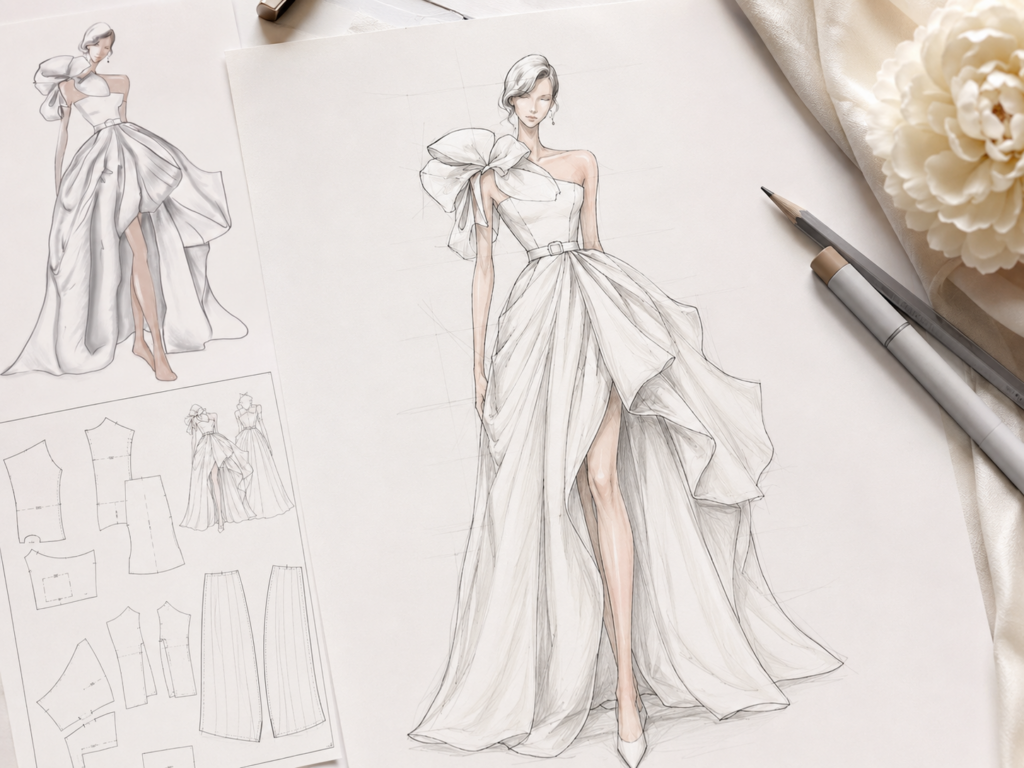
As the illustration develops, the silhouette becomes clearer. The bodice is cleaned up, the waist is sharpened, and the bow receives more volume. The skirt begins to show folds, layers, and direction. The slit is placed in a way that creates elegance without making the design feel heavy.
With each new step, the dress becomes more readable. Shading adds depth, the fabric starts to feel more dimensional, and the relationship between structure and movement becomes stronger. The illustration begins to suggest not only what the gown looks like, but also how it might behave as a real garment.
3. Design Analysis: What Makes This Gown Special?
This evening gown works because of its balance. It is romantic, dramatic, and elegant, but it does not feel overloaded. The design uses a few strong elements and gives each of them enough space to stand out.
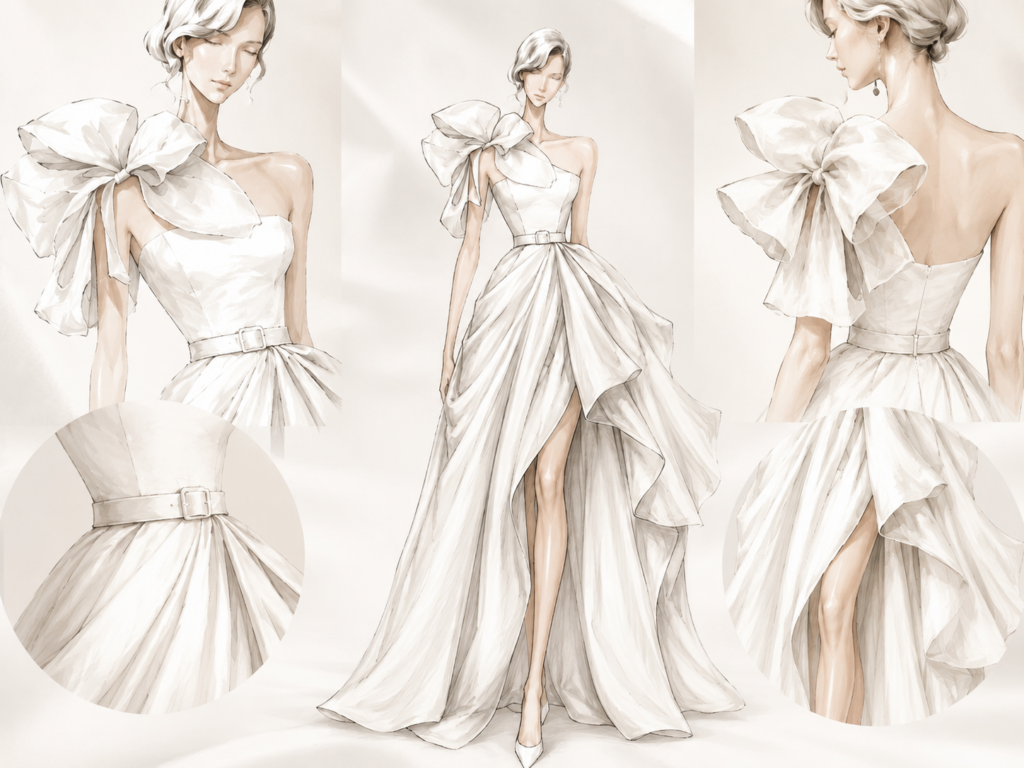
The asymmetrical bodice gives the gown a modern feeling. Instead of a traditional symmetrical neckline, the design exposes one shoulder while the other side is emphasized by the oversized bow. This creates a strong diagonal movement across the upper body.
The bow is the main statement feature. It works almost like a sculptural accessory attached to the dress. Depending on the final fabric choice, it could appear soft and airy or bold and architectural. A material such as organza, taffeta, mikado, or structured satin would help the bow hold its shape.
The slim belt defines the waist and creates a visual break between the fitted bodice and the voluminous skirt. Without this element, the gown could appear too heavy. The belt adds clarity, proportion, and a polished couture detail.
The skirt gives the gown movement. It is full, layered, and softly draped. The high slit adds a modern eveningwear feeling and prevents the volume from becoming too static. The result is a dress that feels elegant from the front, interesting from the side, and dynamic when imagined in motion.
4. From Design to Possible Pattern Concept
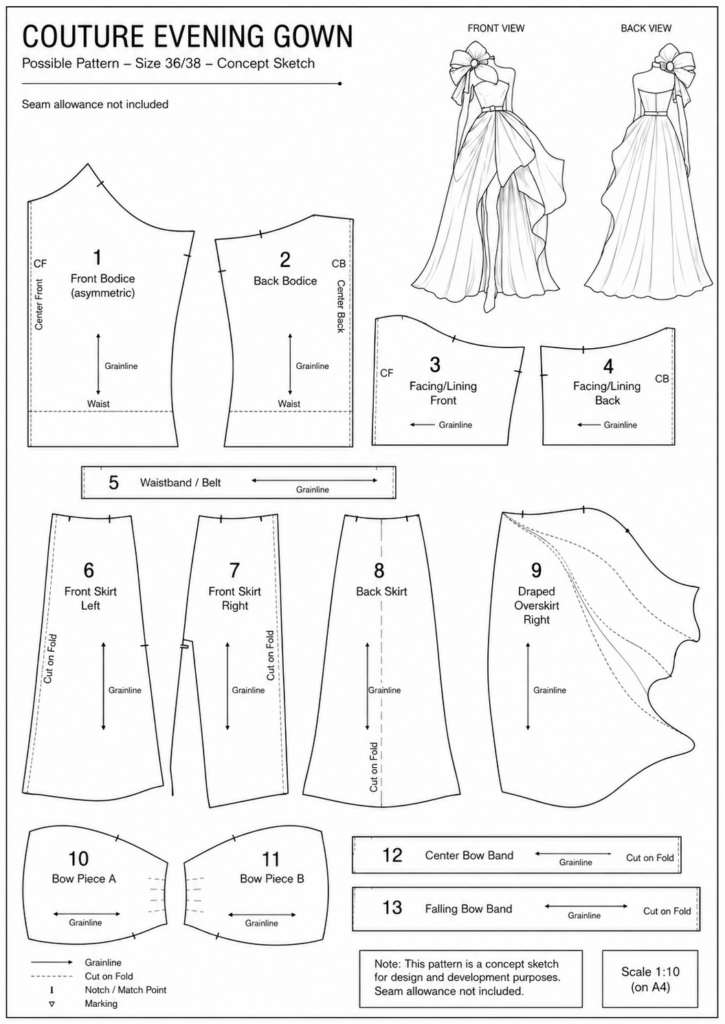
After the illustration is developed, the next question is: how could this design be translated into a real garment?
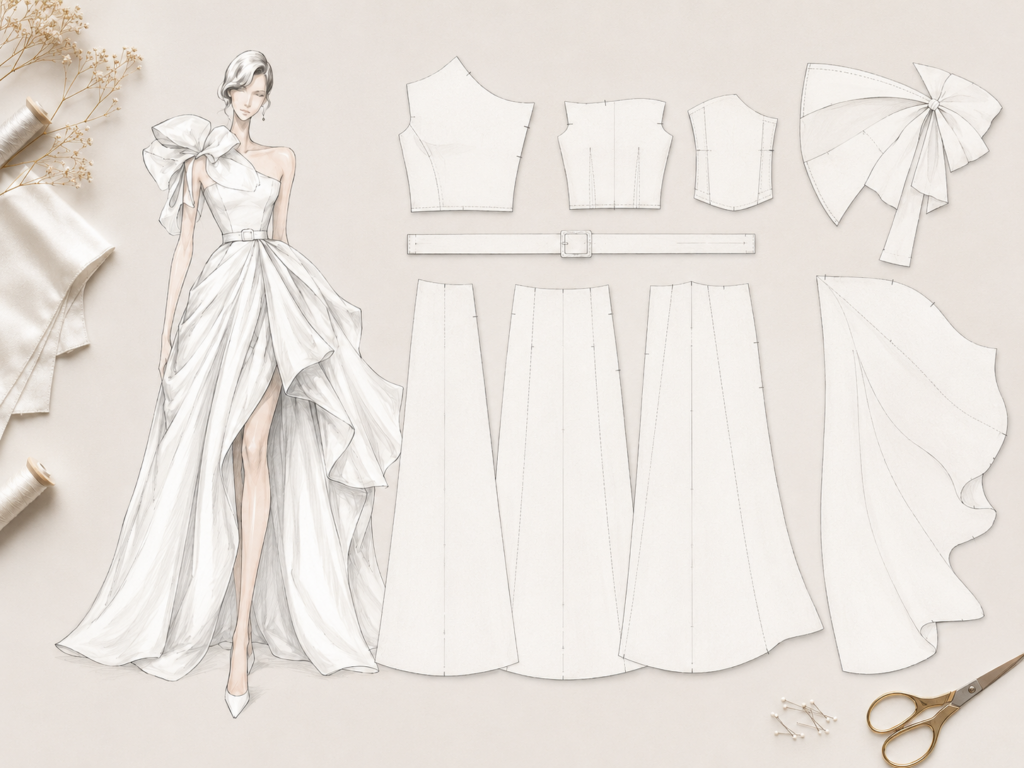
A finished sewing pattern cannot be created from a sketch alone. A production-ready pattern requires exact body measurements, fabric testing, fittings, and technical adjustments. However, the illustration can be used to create a possible pattern concept — a visual breakdown of the main garment components.
The gown can be divided into several key areas.
The Bodice
The bodice is fitted and asymmetrical. It could be constructed like a corset-style bodice or structured bustier. Since one shoulder is exposed, the inner support is especially important. The bodice must hold the body securely without relying on two traditional straps.
Possible pattern pieces include a front bodice, back bodice, lining or facing pieces, and internal support layers. Princess seams, darts, or panel seams could be used to shape the bust and waist. Boning or structured interfacing may also be needed to keep the bodice stable.
The Shoulder Bow
The oversized bow should likely be treated as a separate design element rather than being cut directly as part of the bodice. This makes the construction easier and allows the bow to be shaped more precisely.
A possible bow pattern could include two large bow sections, a center band, and one or two falling ribbon pieces. Depending on the desired effect, the bow could be layered, reinforced, or made from a fabric with natural stiffness.
Creating the bow separately also allows for more flexibility during fitting. Its angle, height, and volume can be adjusted after the bodice is assembled.
The Waist Belt
The belt is a small but important detail. It emphasizes the waist and visually connects the bodice and skirt. It could be a separate belt, a fixed waistband, or a decorative band attached into the waist seam.
The belt may close with a small buckle, hook, snap, or hidden fastening. In the illustration, it appears refined and minimal, so the construction should remain clean and understated.
The Skirt
The skirt is full, floor-length, and softly draped. A wide A-line base, half-circle skirt, or multiple skirt panels could create the volume. The front slit would be created through overlapping front panels.
The left and right front skirt pieces would not need to be identical. One side could wrap over the other to form the slit, while the back skirt could remain fuller and more continuous.
The Draped Overskirt
The dramatic side volume is likely created by an additional draped overskirt or side panel. This could be an asymmetrical fabric piece attached at the waist and allowed to fall in soft waves.
This piece is one of the most important elements of the design. It gives the gown its couture feeling and creates the layered movement seen in the illustration. The outer edge could be curved or irregular to support the cascading effect.
5. Fabric Selection: The Material Defines the Mood
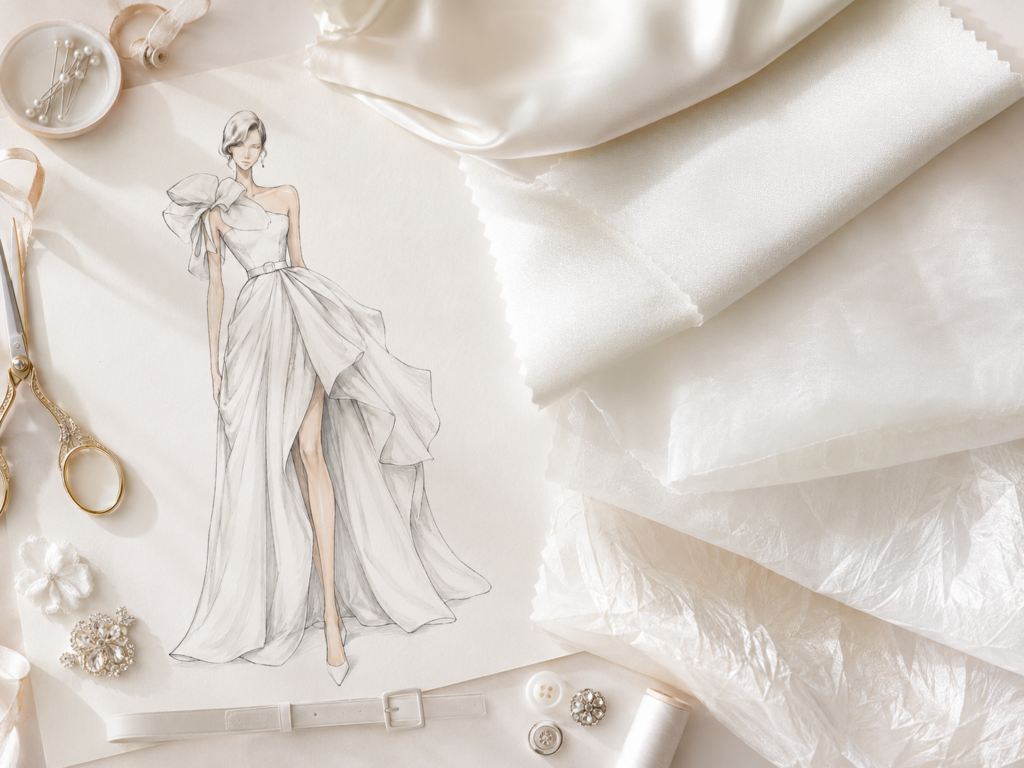
The same design can look completely different depending on the fabric. Fabric choice affects volume, movement, structure, transparency, and overall mood.
For the bodice, a stable fabric would be ideal. Mikado, duchess satin, structured satin, or a firm woven fabric could help maintain the clean shape of the top. The bodice should not collapse or stretch too much, especially because of the asymmetrical neckline.
For the skirt, the choice depends on the desired effect. Satin creates a soft and elegant flow. Organza adds lightness and transparency. Taffeta gives volume and a crisp sound. Mikado creates a more sculptural and architectural silhouette.
For the shoulder bow, structure is essential. A very soft fabric might fall flat and lose the dramatic shape. Organza, taffeta, mikado, or reinforced satin could work well. Interfacing or multiple layers may be necessary to hold the bow’s volume.
The lining is also important. A well-made evening gown is not only beautiful on the outside. Its inner construction supports the shape, improves comfort, and gives the garment a professional finish.
6. Technical Realization: Why a Concept Pattern Matters
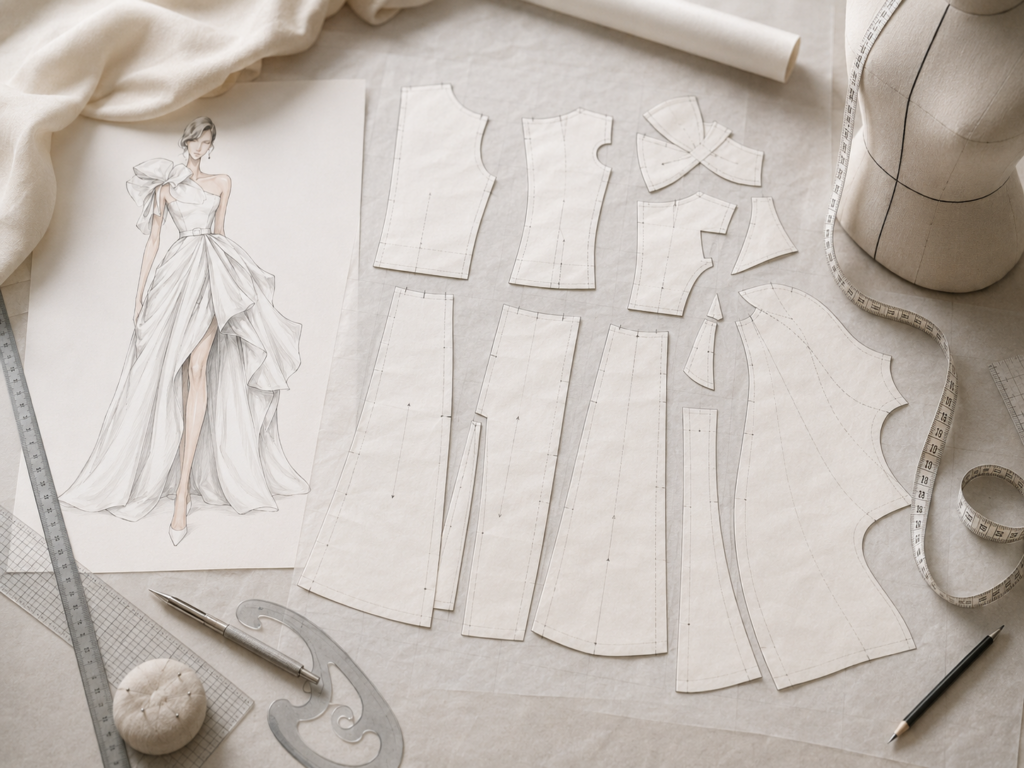
A concept pattern is not the same as a final sewing pattern. It is a design-development tool that helps translate the illustration into possible garment parts.
For this gown, a concept pattern might include:
Front bodice
Back bodice
Front and back facing or lining pieces
Waistband or belt
Left front skirt
Right front skirt
Back skirt
Draped side overskirt
Bow pieces
Center bow band
Falling bow ribbons
This breakdown helps connect creativity with construction. It shows that a dress is not one single shape, but a combination of many individual parts that work together.
For designers, this step is especially valuable. It reveals which parts of the design are simple, which are complex, and which require testing. The sketch shows the dream. The pattern concept begins to show how the dream might be built.
7. Digital Development and Further Editing
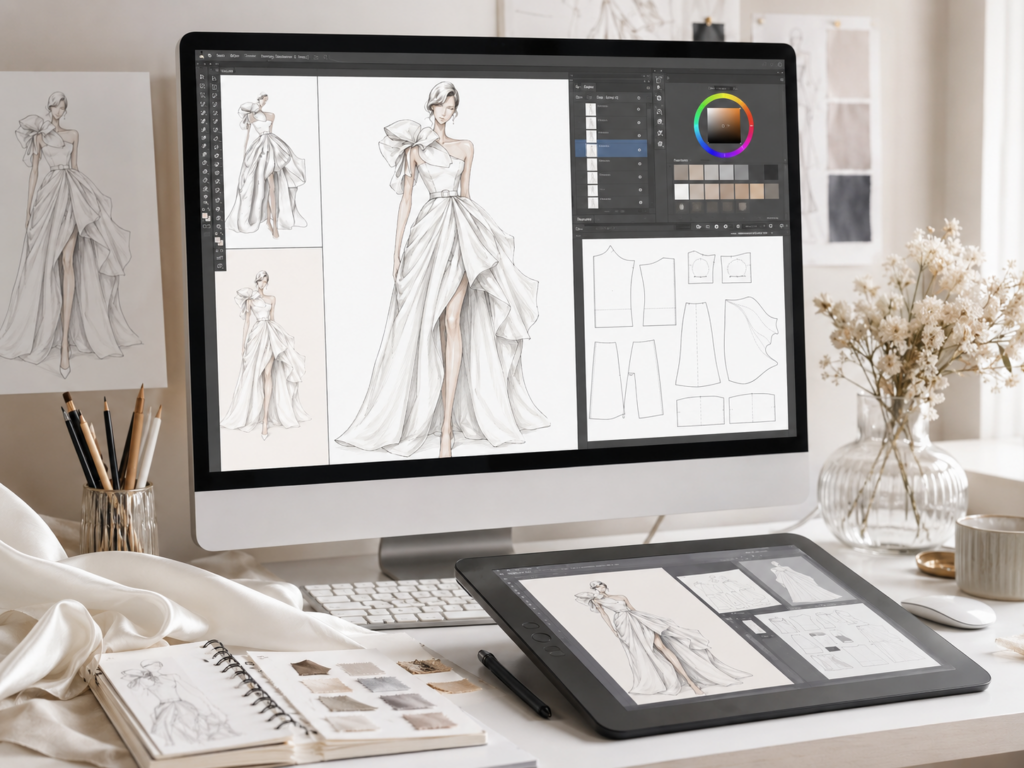
After the sketch, illustration, and concept pattern are created, the design can be developed digitally. Programs such as Photoshop or Illustrator can be useful for refining the visual presentation.
In Photoshop, the illustration can be cleaned up, color variations can be tested, shadows can be improved, and fabric textures can be added. The image can also be prepared for a website, social media, moodboards, or portfolio layouts.
In Illustrator, the pattern pieces could be redrawn as clean vector shapes. This can make them easier to scale, adjust, label, or prepare for further technical development.
Digital editing also allows the designer to present the process clearly. Instead of showing only the final result, the entire development can be visualized: rough idea, refined illustration, material direction, pattern concept, and possible final garment.
For a creative platform like Catwalk4all, this is especially valuable. It allows fashion ideas to be shared not only as finished looks, but as complete creative journeys.
8. Why the Process Matters as Much as the Final Dress
Fashion is often presented as a finished product. But the real creative value often lies in the process behind it.
The first sketch, the uncertain lines, the refinements, the fabric decisions, the construction questions, and the technical breakdown are all part of the design story. They show how an idea becomes more serious, more precise, and more possible.
The journey from sketch to evening gown teaches us that design is not only about aesthetics. It is also about structure, material, proportion, function, and craft.
A sketch gives an idea a visual form.
An illustration gives it emotion and detail.
A pattern concept gives it structure.
Material selection gives it physical identity.
Digital development helps communicate and refine it.
Only then can the idea move closer to becoming a real garment.
Conclusion: From a Single Line to a Couture Concept
This evening gown concept shows how a fashion idea can evolve step by step. It begins with a loose sketch and develops into a refined illustration. From there, it is analyzed, broken down into pattern pieces, and connected to fabric and construction decisions.
The white gown with its asymmetrical bodice, oversized shoulder bow, slim waist belt, draped skirt, and high slit is more than just an elegant design. It is an example of how fashion moves between creativity and craftsmanship.
At Catwalk4all, this process is at the heart of the platform: making fashion ideas visible, encouraging creative exchange, and showing how sketches can grow into real design concepts.
Because every finished garment begins somewhere — often with one simple line.